
LiFePO4 vs NMC: the home-storage chemistry that wins on paper and in the field.
Distributors ask the same question before every first order: should the pack use LiFePO4 or NMC? This is the engineering answer, drawn from the datasheet figures EMS-ESS ships with every system.
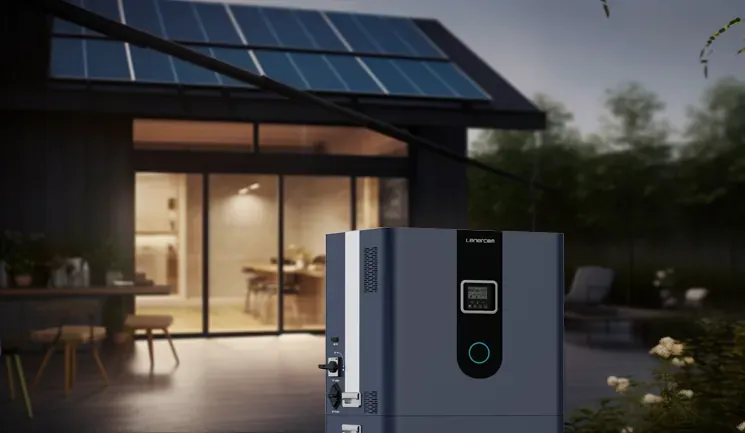
Every home-storage buyer ends up at the same fork in the road: lithium iron phosphate (LiFePO4) or nickel-manganese-cobalt (NMC). Both are lithium-ion, but they age, fail and cost differently. For a product that must sit in a garage for a decade, that difference decides your warranty liability and your return rate.
EMS-ESS standardizes on LiFePO4 across its 3–12 kW systems, from 5.12 kWh single modules up to 30.72 kWh. The decision is not a cost-cutting shortcut — it is a direct result of the datasheet numbers below.
Cycle life is the number that sets your warranty cost.
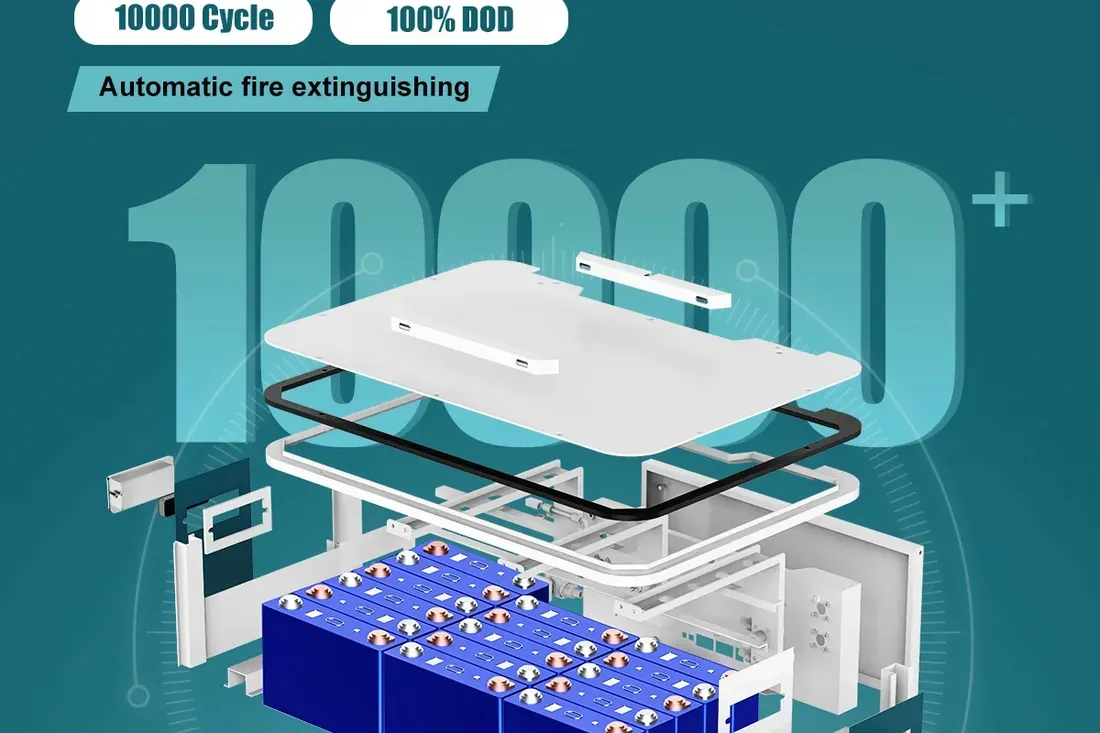
EMS-ESS rates its LiFePO4 cells at 10,000 cycles at 100% depth of discharge, measured in an experimental environment at a 0.2 C charge-discharge rate and 25 °C. That is the figure printed on the product render, and it is what a 10-year performance warranty is built on.
Independent LiFePO4 packs from our battery-manufacturing partner are rated at 2,000+ cycles at 1 C and 100% DOD. Most LiFePO4 cells still hold more than 80% of rated capacity after 2,000 full cycles. In the same catalog, a ternary (NMC) pack carries a 600+ cycle rating at 1 C and 100% DOD.
A cell that cycles ten times longer is not just a nicer number. It means the same pack serves a customer for a decade instead of needing a mid-life replacement, which is the single largest hidden cost in a storage installation.
Thermal safety: an 800 °C headroom changes the failure mode.
The two chemistries fail very differently under abuse. NMC cells list a typical thermal-runaway temperature of 200 °C; above that threshold a ternary cell can enter fire and explosion failure modes. LiFePO4 lists a typical thermal-runaway temperature of 800 °C and passes nail-penetration testing without fire or explosion.
That margin is why a home ESS built on LFP can sit in a garage or utility room with confidence. It is also the foundation the EMS-ESS protection layer rests on: six protections — overcharge, overvoltage, overcurrent, overdischarge, overtemperature and overload — plus a built-in automatic fire-suppression unit inside the enclosure.
A BMS monitoring 16 cells with six high-precision temperature probes closes the loop, catching an anomaly before the chemistry is ever asked to absorb it.
Depth of discharge: rated for the full 100%.
Most battery marketing hides a caveat: the headline cycle count only holds if you never touch the bottom of the pack. Shorter-lived chemistries are routinely derated to a fraction of nominal capacity to protect cycle life.
EMS-ESS takes the opposite position. The LiFePO4 modules are rated at 100% DOD, so the full 5.12 kWh of each module is usable every single cycle. The 10,000-cycle figure above already assumes that full-depth usage, not a gentle partial-discharge profile.
Cost and energy density: the only place NMC still wins.
NMC keeps one genuine advantage — specific energy. Ternary cells deliver about 200 Wh/kg or more, against about 120 Wh/kg for LiFePO4. That is why NMC dominates applications where every gram matters, such as e-bike and portable packs.
For a stationary cabinet, LiFePO4 wins on the numbers that actually bill you. Its raw materials are domestically sourced, contain no precious metals, and run roughly 20% cheaper than ternary cells. A home battery sits still, so the density penalty costs nothing while the price and safety advantages compound.
Voltage differs too. LiFePO4 cells sit at 3.2 V nominal and are wired 16-in-series into a 51.2 V pack; NMC cells sit at 3.6 V nominal. Neither is a problem for the hybrid inverter, but the lower LFP voltage means more cells and a more granular BMS view.
LiFePO4 vs NMC, in one table.
| Parameter | LiFePO4 (EMS-ESS) | NMC (ternary) |
|---|---|---|
| Cycle life | 10,000 cycles @ 100% DOD, 0.2 C / 25 °C | 600+ cycles @ 1 C / 100% DOD |
| Thermal runaway | ~800 °C typical | ~200 °C typical |
| Puncture behavior | No fire, no explosion | Fire / explosion risk above 200 °C |
| Energy density | ≥120 Wh/kg | ≥200 Wh/kg |
| Nominal voltage | 3.2 V (16S = 51.2 V) | 3.6 V |
| Cell cost | ~20% cheaper | Higher; imported materials |
| Depth of discharge | 100% DOD rated | Cycle life drops fast at full DOD |
| Best use | Stationary storage, backup, high-temp | Energy-dense portable / e-bike |
| EMS-ESS adoption | Standard on all ESS lines | Not used |
For home storage, LiFePO4 is the engineering default.
NMC still makes sense where energy density pays for itself — in a backpack, not a garage. In a stationary system, the 10,000-cycle LFP figure, the 800 °C thermal headroom and the 100% DOD rating add up to a product you can warranty for a decade without betting the margin.
That is the chemistry behind every EMS-ESS wall-mounted and stackable system, from 5.12 kWh to 30.72 kWh. See the full datasheet and expansion table on the wall-mounted series page.
Ready for a distributor quote?
Send your market, volume and target spec — our sales team replies within 24 hours on working days.