
Sizing a home battery: from 5.12 kWh to 30.72 kWh without overspending.
Right-sizing a home battery is a three-step exercise: baseline the daily load, list the circuits that must stay live, then pair PV. This guide walks the numbers with EMS-ESS capacity figures.
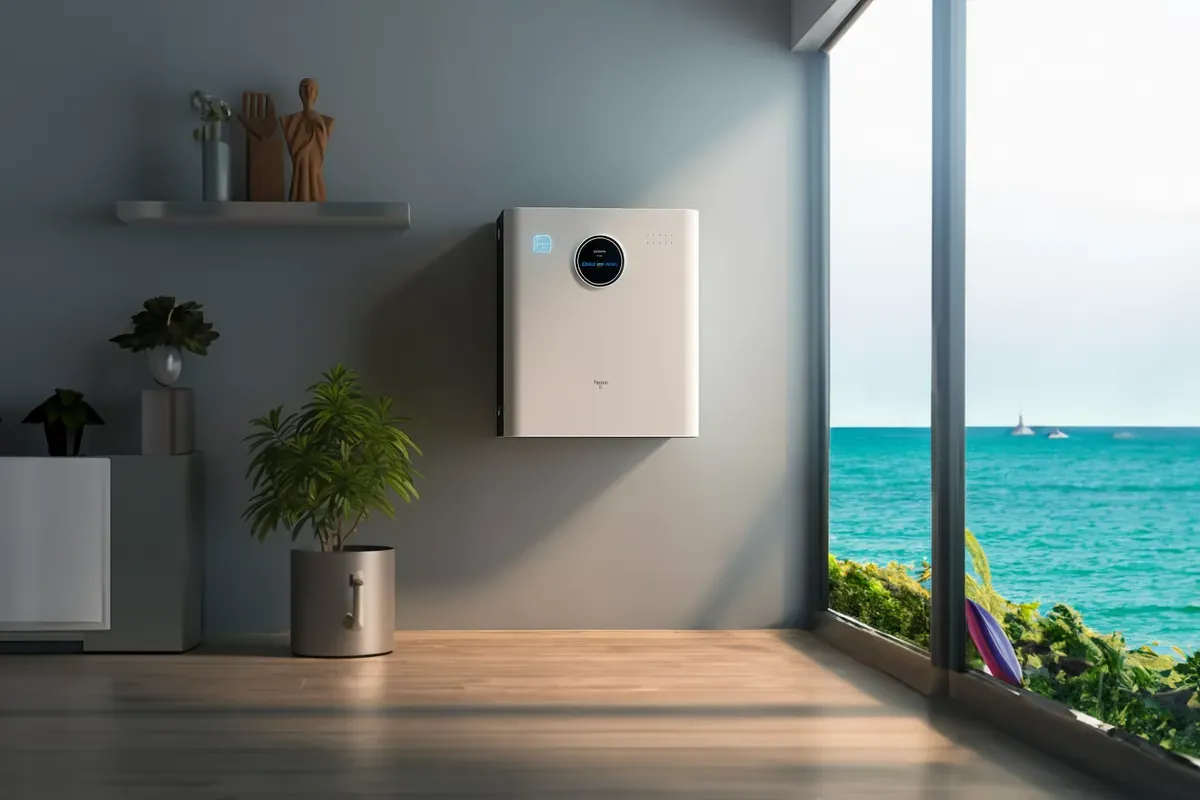
The most expensive mistake in residential storage is not underbuying capacity — it is buying a system sized from a guess. A pack that is too small trips out in the first real outage; one that is too large carries interest and never cycles deep enough to pay back.
EMS-ESS systems scale in 5.12 kWh modules, from one module up to five (25.6 kWh). That granularity is the point: you add capacity only after the load math justifies it.
Step 1: Baseline your daily consumption.
Start with a real brief, not a wish list. A typical inquiry reads like this: a distributor in South Africa asks for a 5 kW-class home backup that keeps lights, a fridge and a home office alive through grid dropouts. Germany, by contrast, averaged just 13.7 minutes of outage per household in 2023, so the brief there leans harder on self-consumption than on long backup.
The EMS-ESS 5 kW single-phase model fits the South African brief on the output side: 5,000 W rated output at 220–240 V with 21.7 A rated current. Its single battery module stores 5.12 kWh, which covers a few hours of the essential circuits rather than the whole house.
Baseline the load by reading the daily kilowatt-hours off the utility bill, then split it into daytime use that PV covers and evening use the battery must serve. The evening share is the number your storage actually has to carry.
Step 2: Build the backup load list — and drop the heaters.
Do not size the battery for the whole home. List only the circuits that must stay live: router, desktop, refrigerator, a few lights and the security system. Heavy resistive loads — water heaters, ovens, air conditioning — belong on the grid side, because they would drain the pack in minutes and rarely need backup.
The EMS-ESS system makes that switchover invisible. It moves to battery in 10 ms (UPS and VDE modes) or 20 ms (APL mode), fast enough that lights do not flicker and a desktop computer does not black out. While it runs, the BMS watches all 16 cells with six temperature probes, so the backup event never becomes a battery event.
Step 3: Pair PV and chase self-consumption.
In markets with rooftop PV, the battery earns its keep by raising self-consumption. A PV array alone typically lets a home use about 30% of what it generates; adding storage and control lifts that to around 80%.
That gap matters because export revenue is collapsing. German wholesale power hit minus €250/MWh on 11 May 2025, and net end-customer prices fell below zero for the first time. Storing the midday surplus for evening use beats exporting into a negative price.
Match the inverter's PV window to the array. The EMS-ESS single-phase 3–5 kW models accept up to 4,000 W of PV across a 64–130 V MPPT range, so the same box that runs the backup also feeds the battery from the roof.
The capacity ladder, in 5.12 kWh steps.
Each module adds exactly 5.12 kWh of usable LiFePO4 capacity. The table below is the expansion path for single-phase entry systems; the 10 kS model takes three to six modules (15.36–30.72 kWh) and the three-phase high-voltage units take two to three battery modules.
| Modules | Usable capacity |
|---|---|
| 1 module | 5.12 kWh |
| 2 modules | 10.24 kWh |
| 3 modules | 15.36 kWh |
| 4 modules | 20.48 kWh |
| 5 modules | 25.6 kWh |
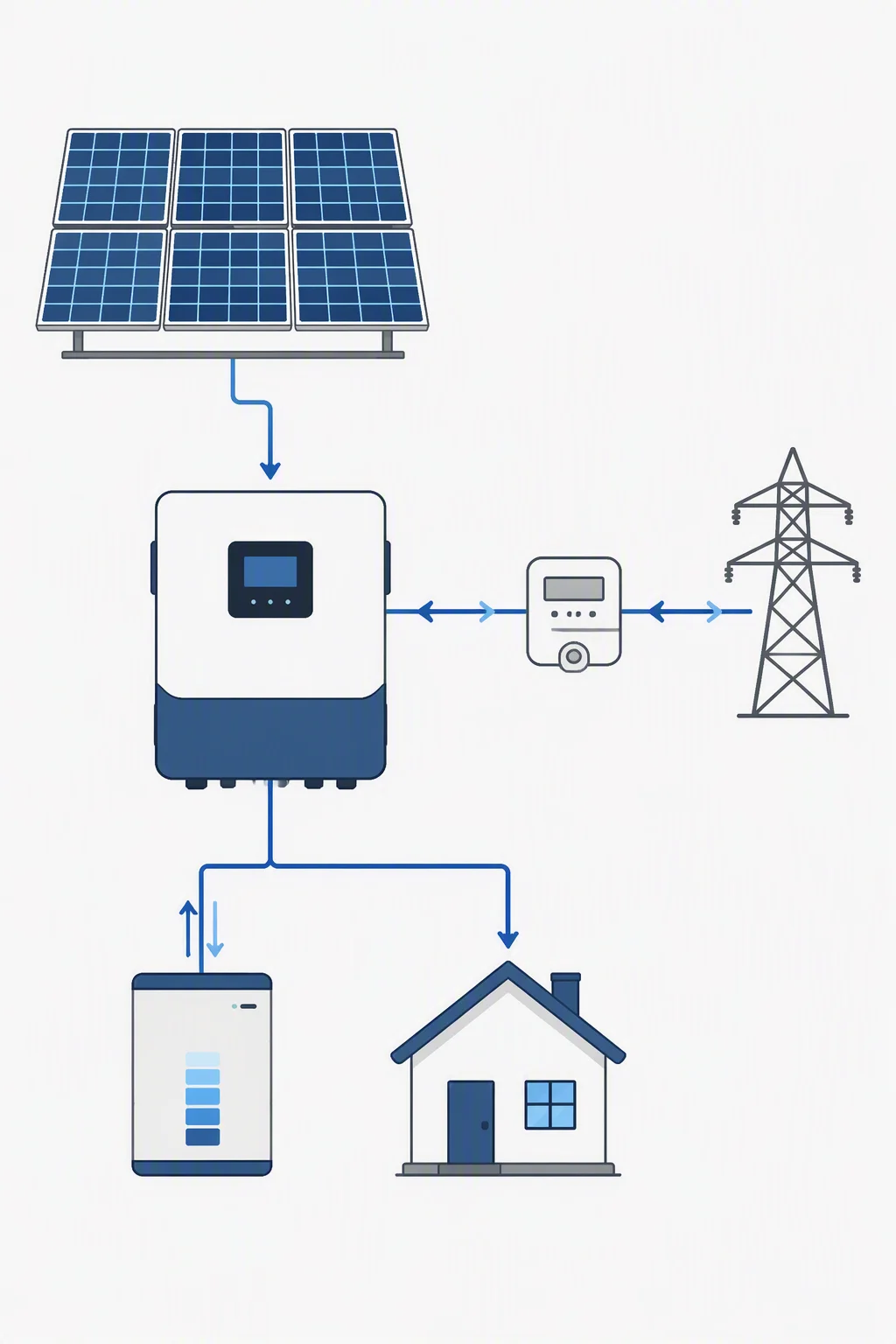
Pair the battery with GTB 400–1600 W microinverters.
If the roof has partial shade or odd orientations, pair the ESS with GTB microinverters instead of a single string inverter. Each GTB unit tracks its own module across a 22–48 V MPPT range, so one shaded panel stops costing you the whole string.
- Module-level MPPT across 22–48 V per unit
- GTB 400–1600 W models scale from 1 to 4 PV inputs
- IP65, fanless, with WiFi cloud monitoring
Size from the load, not from a catalog.
The formula is simple: baseline the evening load, list the must-run circuits, add storage until the capacity covers them, then let PV and the 10 ms switchover do the rest. Start at one 5.12 kWh module and expand only when the math says so.
Ready for a distributor quote?
Send your daily kWh, peak load and PV size — our sales team replies within 24 hours on working days.